Report Details
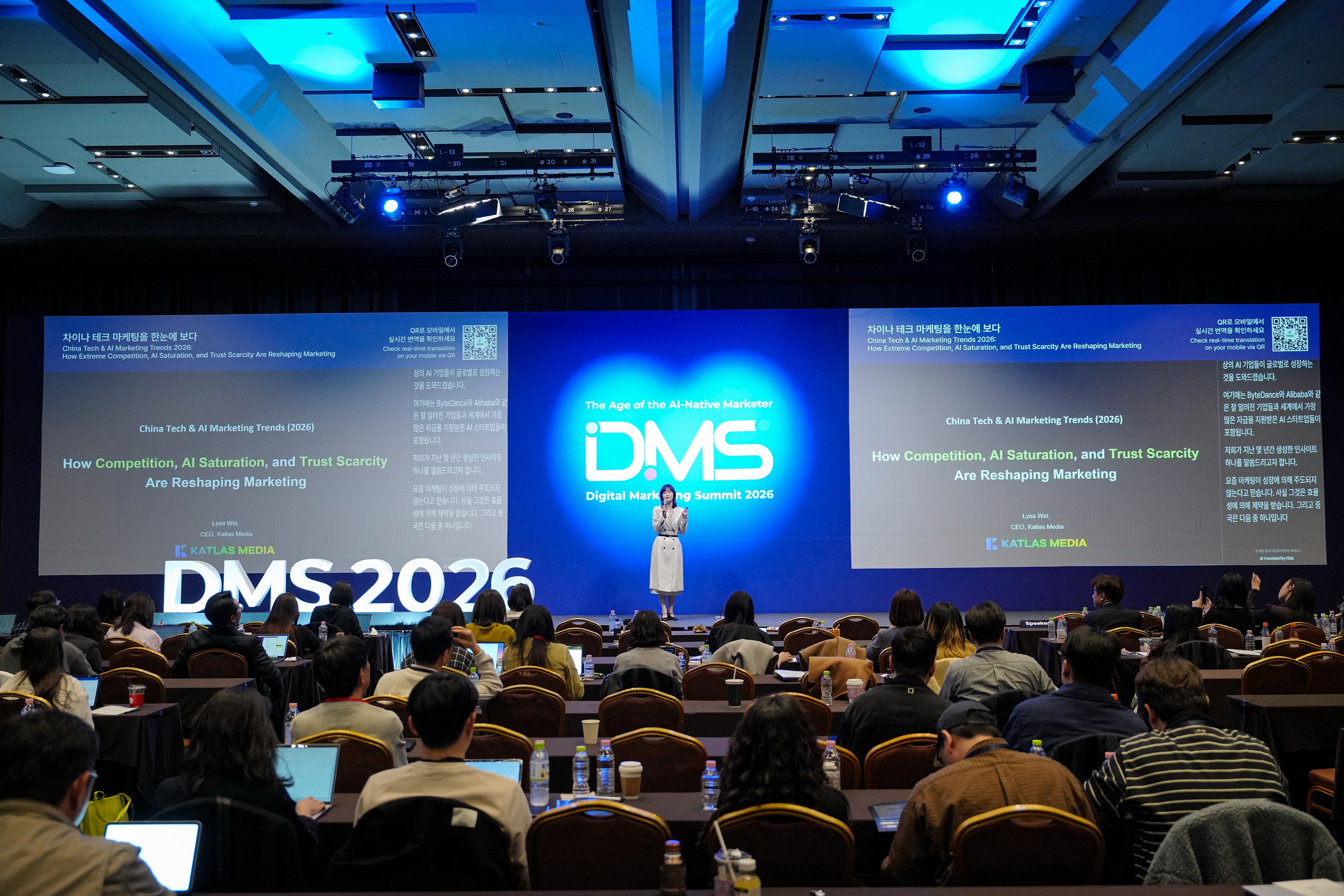
Report: China Tech & AI Marketing Trends 2026
Subtitle: How Extreme Competition, AI Saturation, and Trust Scarcity Are Reshaping China Tech & AI Marketing
Presented by: Katlas Media
Author: Lysa Wei, CEO & Co-Founder of Katlas Media
Executive Summary
China is often viewed through the lens of its scale, but for global marketers in 2026, its true value lies in its role as an "Early Signal Market." It is not merely that China is more creative; it is that marketing there is evolving under structural pressures - extreme competition, rapid AI saturation, and a scarcity of consumer trust - that the rest of the world is only beginning to face.
This report outlines the structural shifts occurring in China's B2B and B2C marketing landscapes. From the emergence of the "China AI Breakout Model" to the transformation of content into "searchable infrastructure," and finally, the counter-intuitive return to "Radical Sincerity," we provide a roadmap for navigating the future of brand growth.
1. Introduction: Innovation Born of Necessity
In 2026, the Chinese marketing landscape is defined by a paradox. While marketing budgets are still growing year-over-year, this represents the slowest pace of growth in seven years. Simultaneously, 43% of advertisers expect to reduce their investment during the past two years.
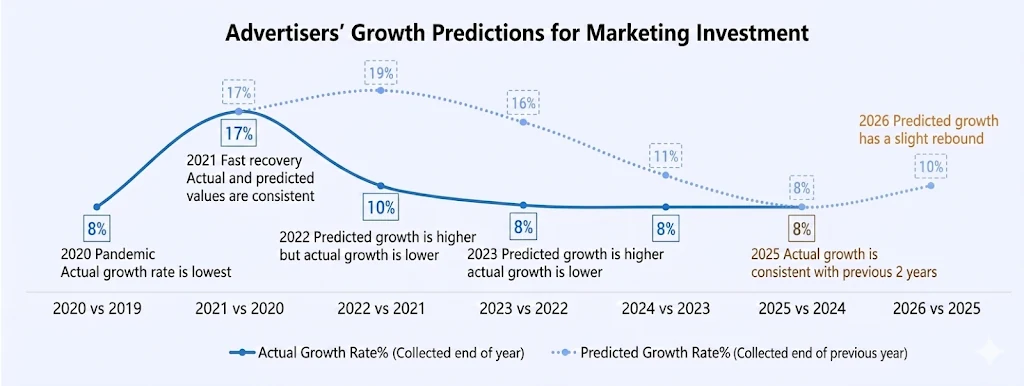
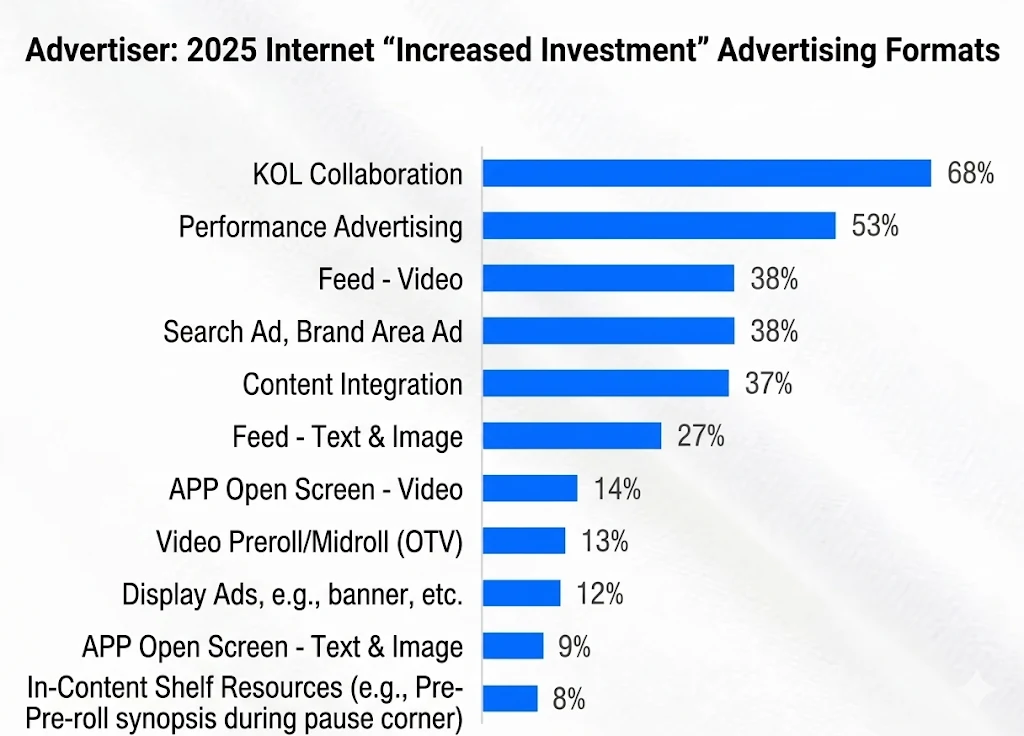
The dominant pressure facing marketers in China is no longer unchecked expansion or experimental growth, but strict ROI accountability and operational efficiency. China is where marketing evolves not by ambition, but by necessity.
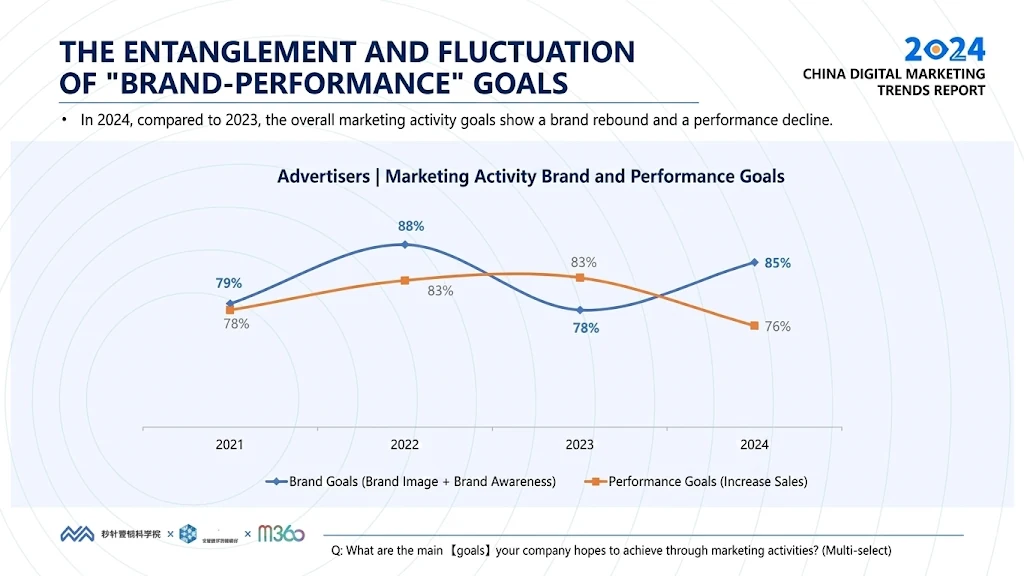
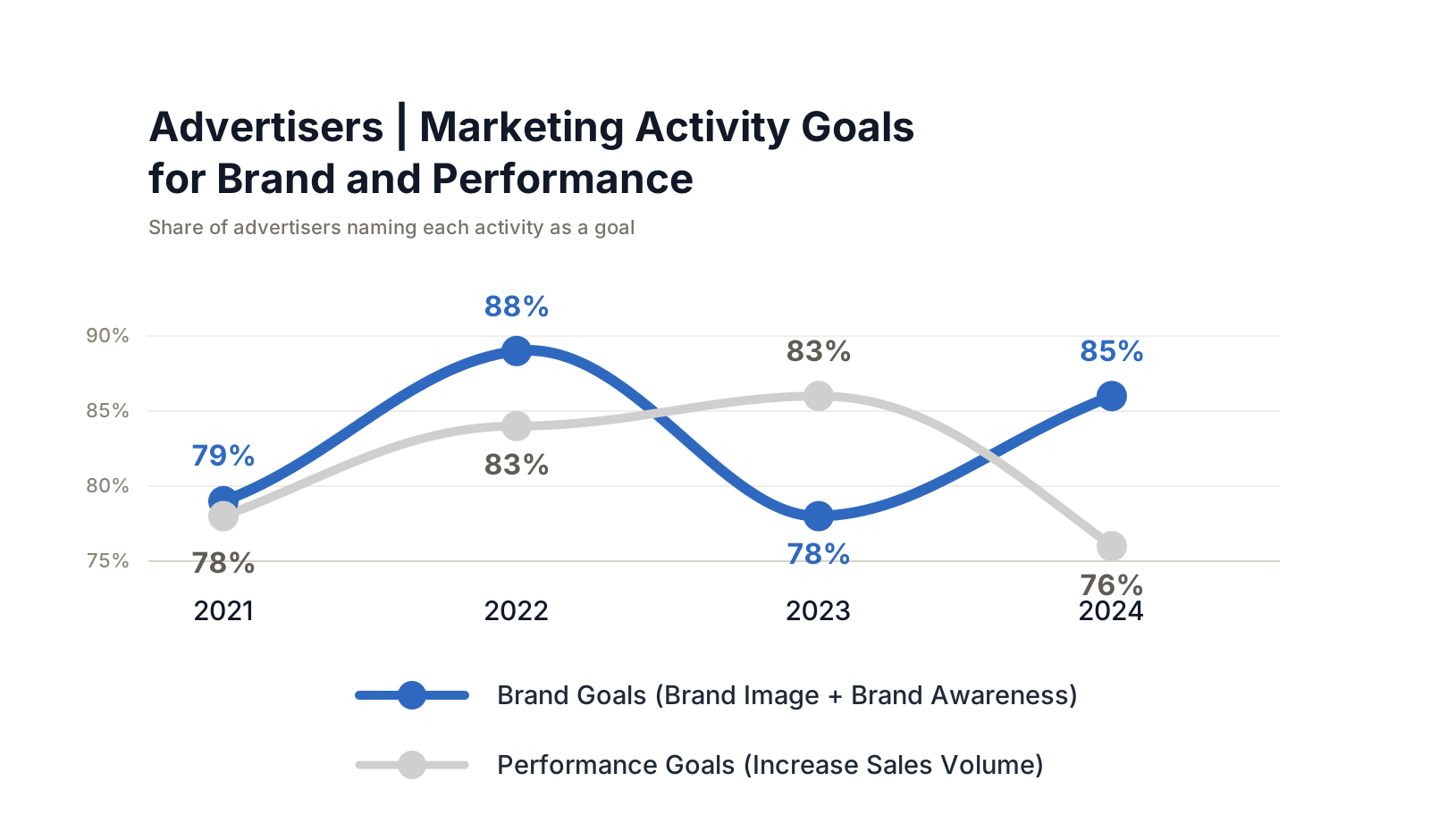
This structural context has created a "Core Tension" between brand building and performance marketing. While 85% of advertisers agree that brand building is critical for long-term survival, 64% continue to shift budgets toward performance-driven outcomes. Brands believe in long-term value but act under short-term pressure. This contradiction sits at the center of every trend currently emerging in China and serves as a critical case study for global markets facing similar economic headwinds.
2. Trend One: AI "Outbreak" Is Rewriting the Operating System of Marketing
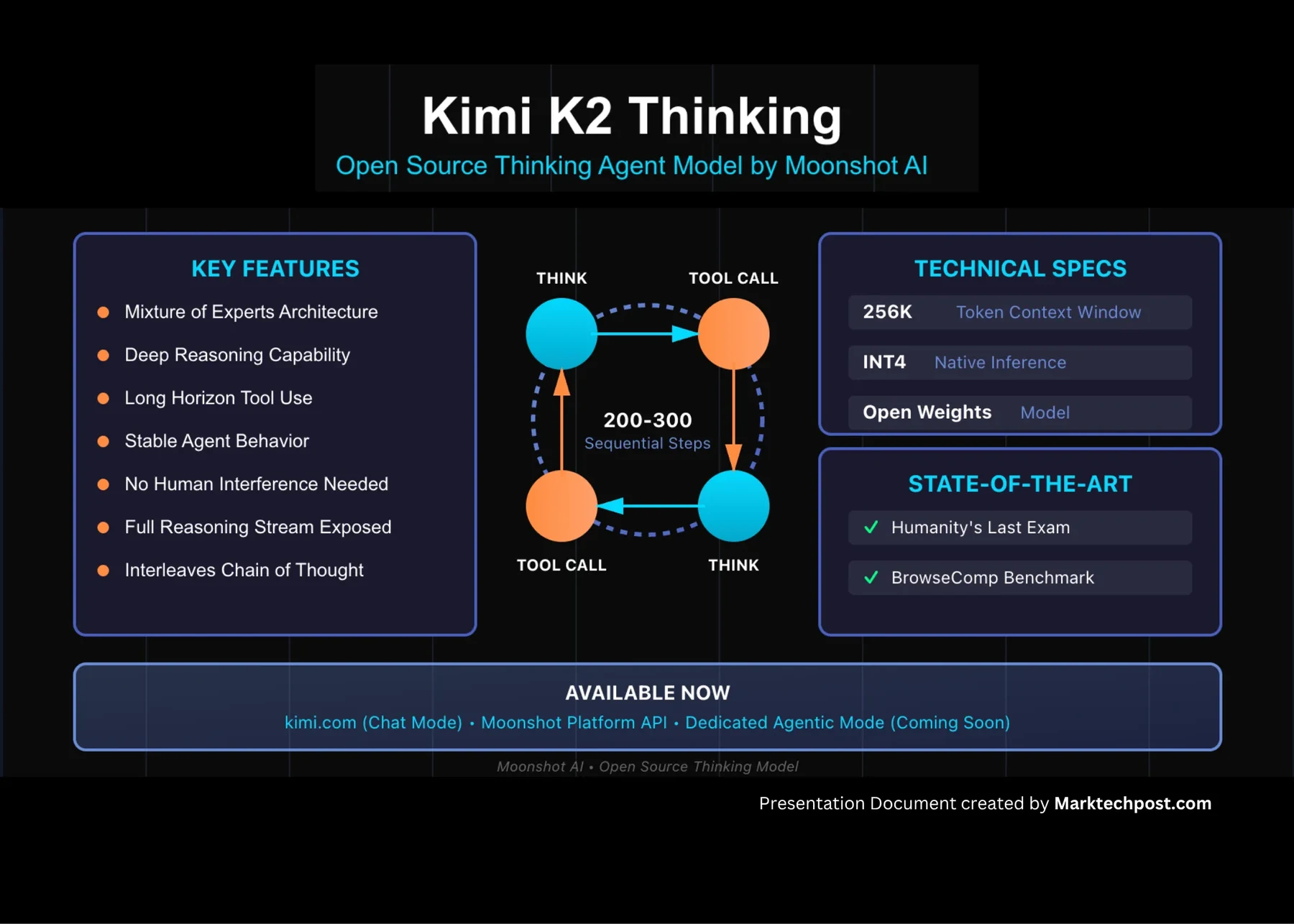
The rapid virality of AI products in China - such as Kimi, DeepSeek, Manus, and Qwen - follows a recognizable and replicable pattern. At Katlas Media, we define this as the "China AI Breakout Model": AI is rewriting the operating system of marketing.
2.1 This Is Not a Tool Upgrade. It Is a Structural Shift.
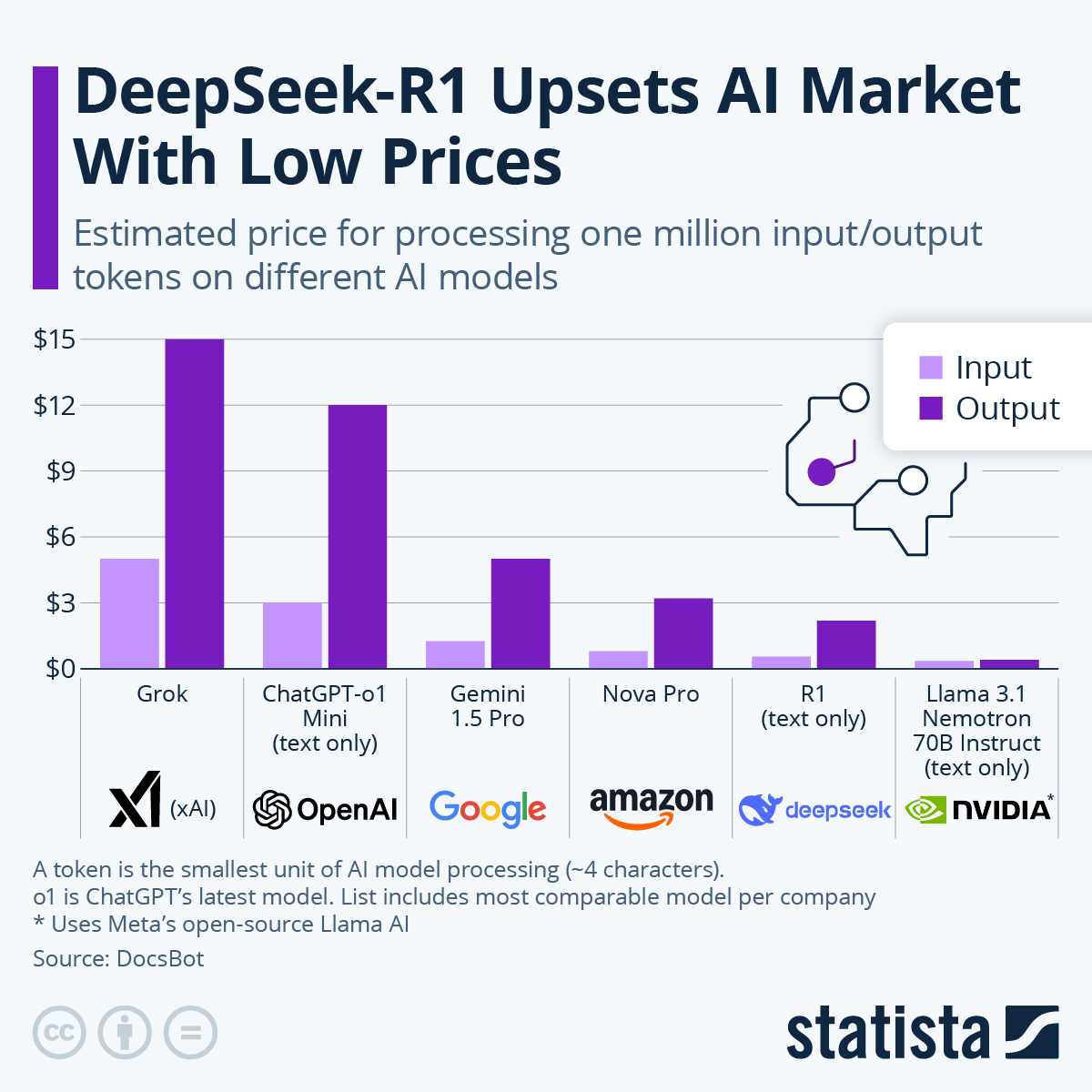
In the hyper-competitive Chinese market, differentiation is often temporary, but temporality is sufficient to capture market share. Successful products launch with a distinct "hard" advantage, such as superior long-context capabilities (Kimi), dramatic cost advantages (DeepSeek), or agent-level execution. The goal is not permanent superiority, but an immediate, undeniable edge.
Most conversations about AI in marketing still revolve around efficiency, cost reduction, and faster content production.
But that is surface-level. AI is not changing marketing at the execution layer. It is changing marketing at the production-function level. Historically, marketing was constrained by limited human bandwidth, high content production costs, and expensive experimentation. Now those constraints are collapsing. When marginal content cost approaches zero, marketing shifts from a content scarcity game to an attention allocation game.
This applies to every industry. Not just SaaS.
2.2 The Engineered "Aha Moment" of AI Turns Marketing Into a System, Not a Department
Historically, marketing was creativity-driven, campaign-centric, and traffic-focused. In the AI era, marketing becomes system design, data orchestration, and automated experimentation. The CMO becomes a growth systems architect with the ability to drive a system of "emotional connection" with users and audiences.
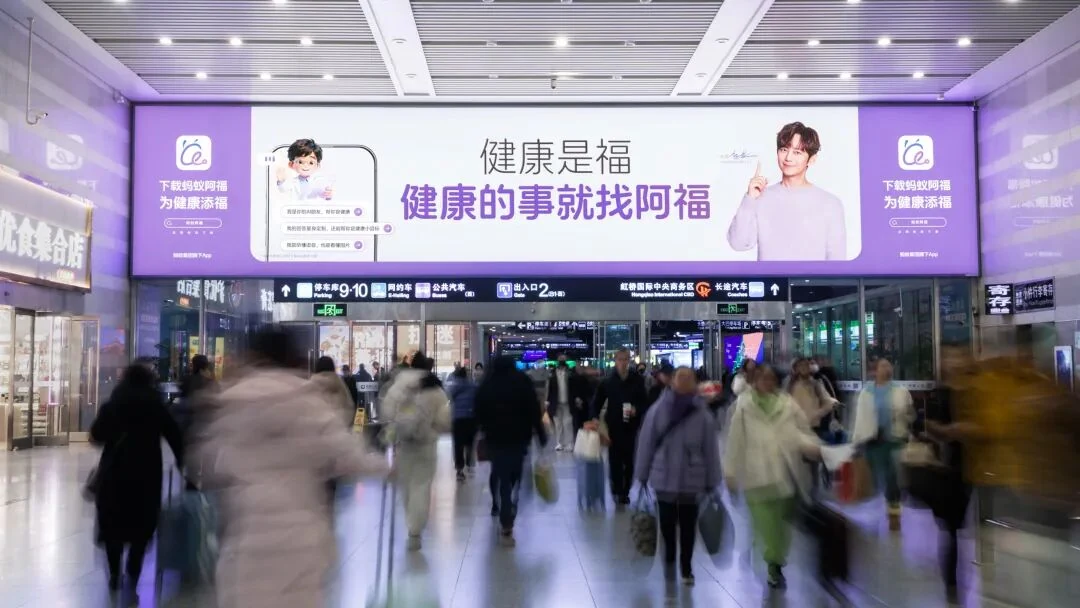
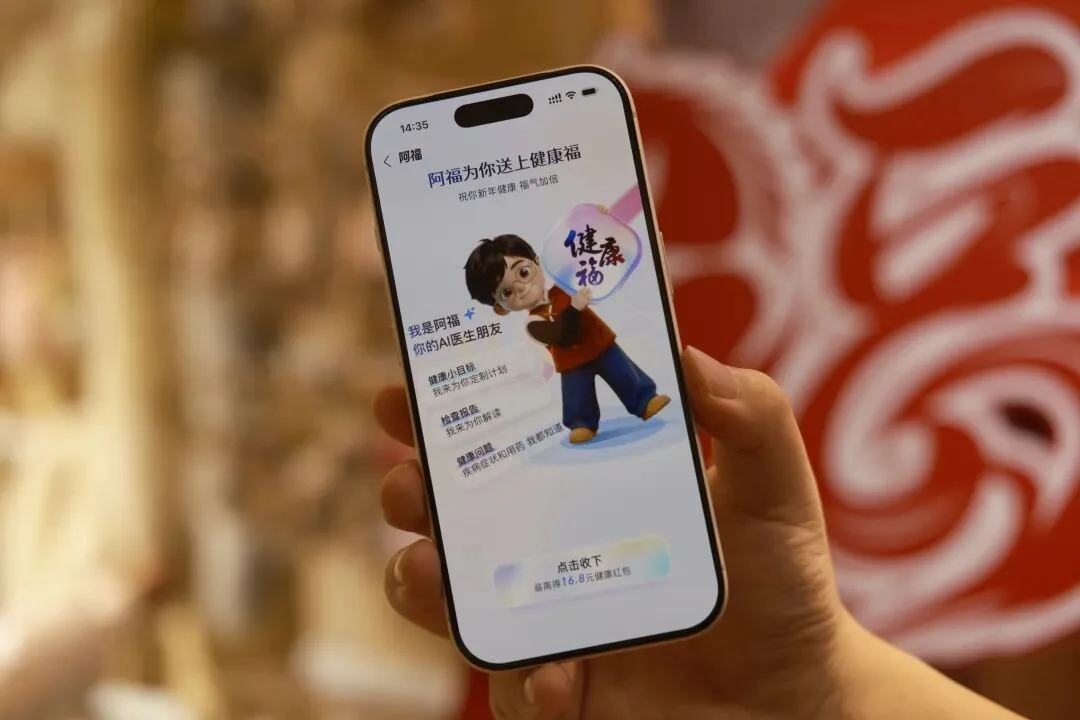
Viral adoption of AI tools in China does not rely on complex onboarding. Instead, products are engineered to deliver emotional surprise combined with instant comprehension. The value must be self-evident within seconds, requiring no explanation.

2.3 Low-Barrier, Mass-Participatory Assets of Marketing Accessibility
The primary distribution channel for AI in China is not only PR, media communication, or influencer marketing, but everyday users. This is facilitated by "shareable assets" embedded in product design: screenshots, invite codes, and highly visual outputs. These assets turn users into distributors, leveraging private traffic such as WeChat groups and public social feeds simultaneously.
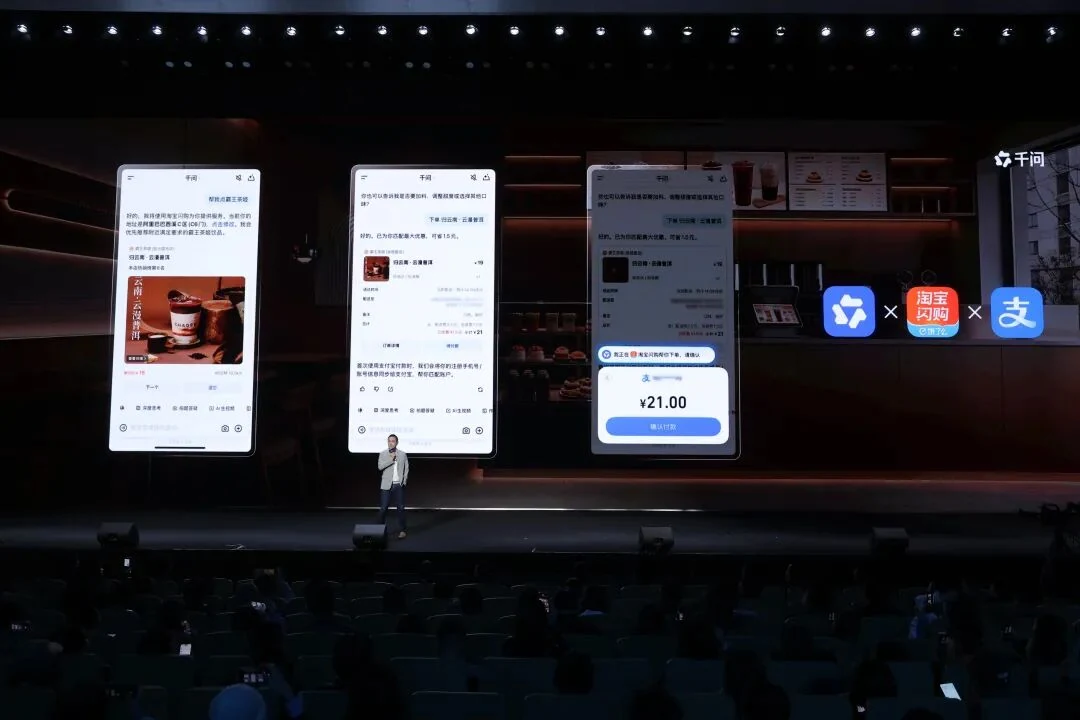
A defining moment occurred during Chinese New Year 2026, when the tech giants' traditional "Red Packet War" evolved into an "AI Subsidy War." Qwen (Tongyi) and Doubao (Dola) invested 3 billion RMB and 1 billion RMB respectively, executing a massive user education campaign disguised as a promotion.
The strategy centered on a high-frequency lifestyle scenario: ordering bubble tea via AI. Instead of simply giving away cash, these platforms required users to interact with the LLM to complete the order. This triggered a massive internet phenomenon, effectively "training" millions of users on how to prompt an AI agent to solve real-world problems. By linking AI to a daily habit, bubble tea, they successfully bridged the gap between complex technology and mass consumer adoption in a single week.
Strategic Implication: For global brands, the lesson is clear. AI shifting the marketing industry is not an accident; it is an engineered brand structure. AI will create two extremes: massive expansion of average content or stronger concentration around trusted brands. In an environment of information saturation, users anchor to credibility. In the AI era, the brand is not optional. It becomes a survival mechanism.
3. Trend Two: From Content Industrialization to Content Infrastructure
In the West, content is often viewed as "creative output" - a campaign to be launched and measured. In China, content has evolved into "Structured, Searchable Infrastructure." AI industrializes content, and content becomes dynamic infrastructure. Marketing assets are no longer static campaigns; they become systems that adapt in real time. Marketing shifts from campaigns to systems.

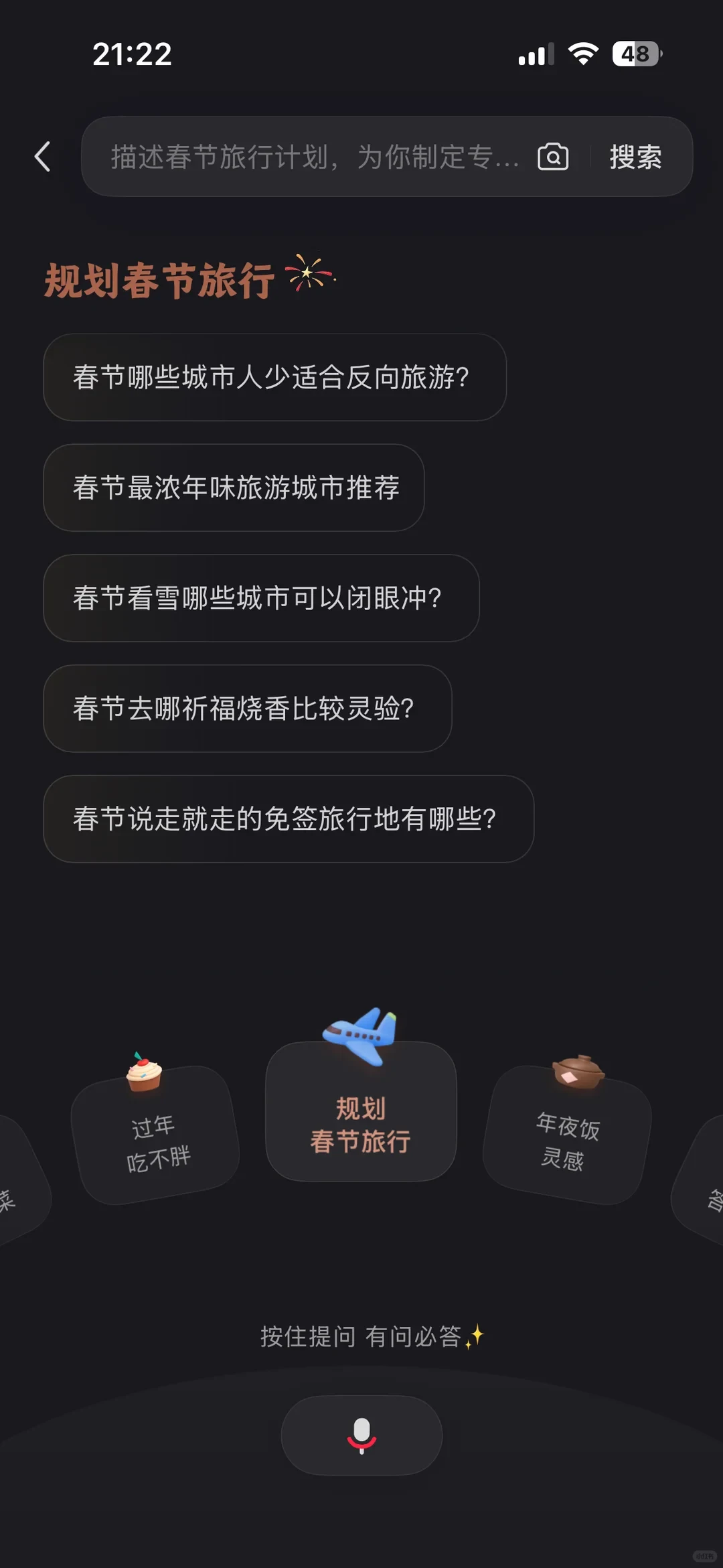
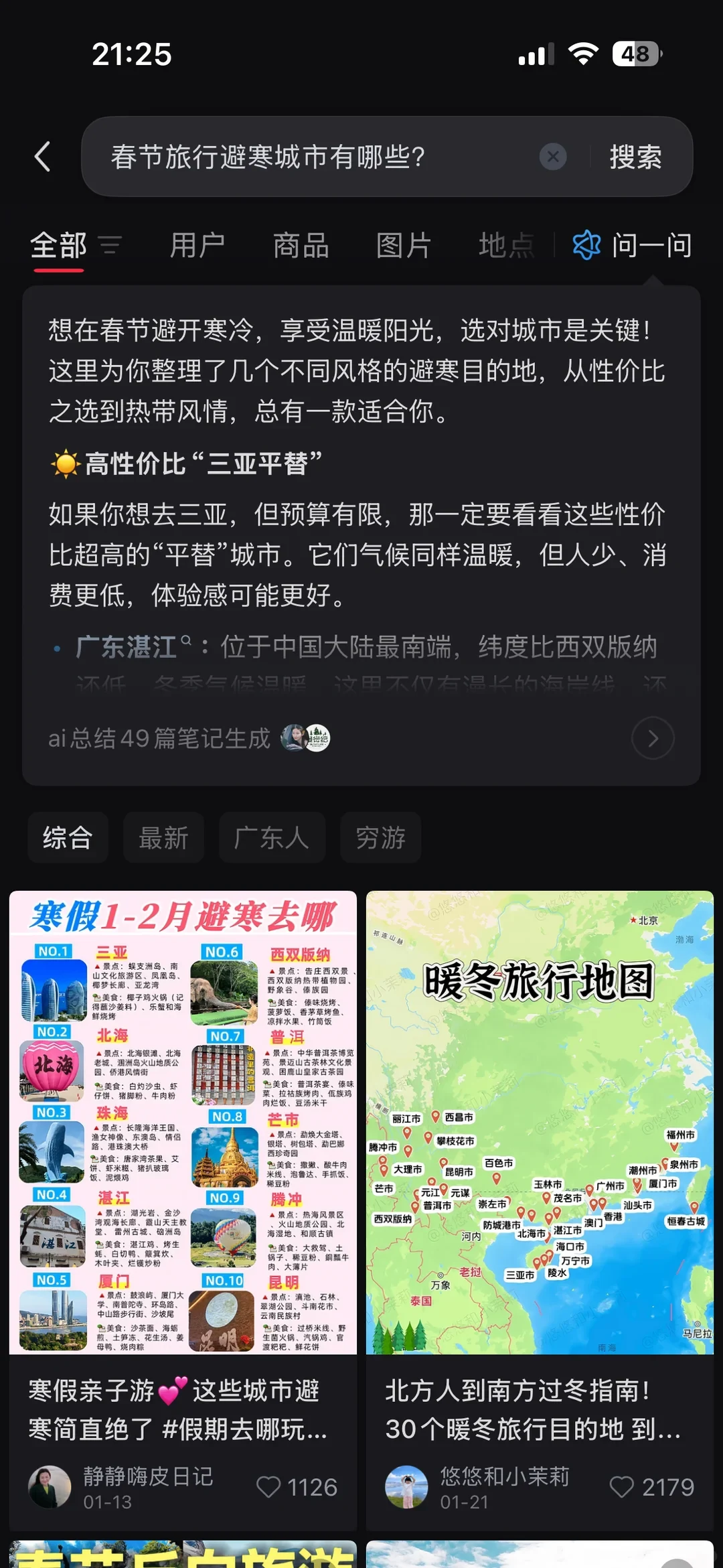
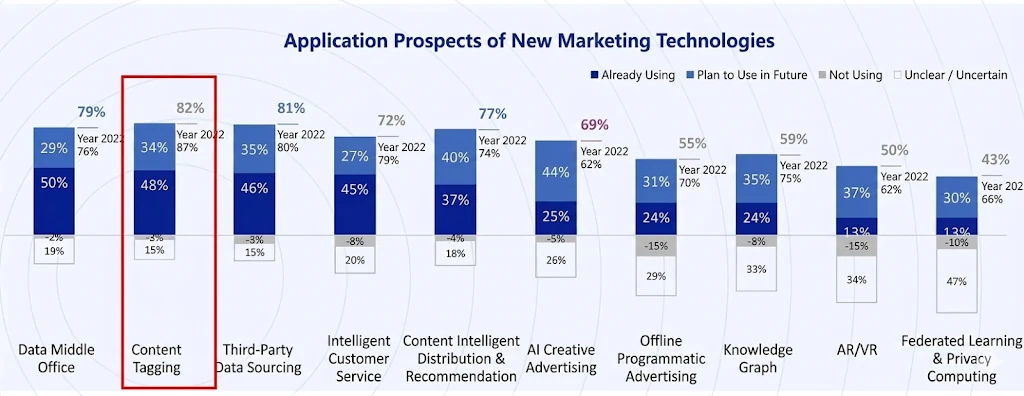
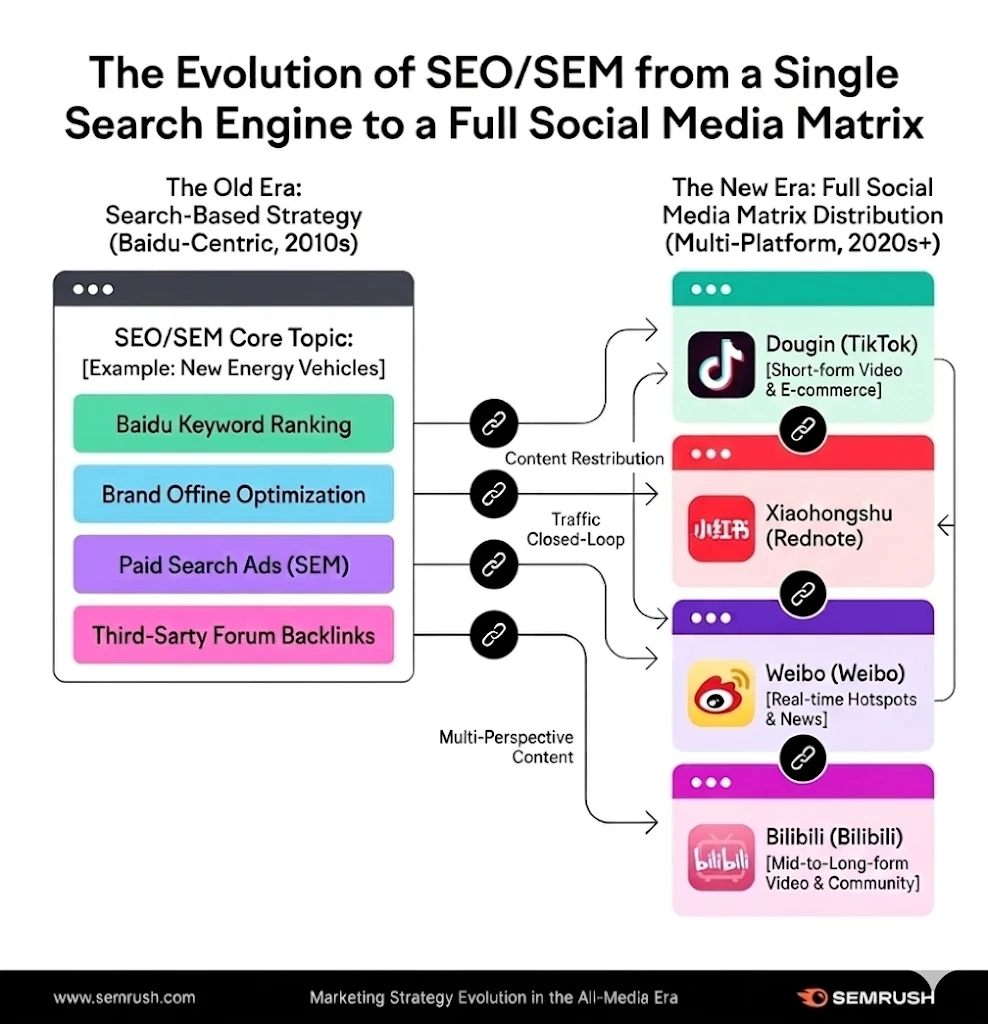
Data shows that 82% of Chinese advertisers now prioritize content tagging. This shift is driven by the convergence of search engines, social feeds, and recommendation systems. Platforms like Xiaohongshu (Rednote) now function primarily as search engines for lifestyle and B2B decision-making, while Douyin (TikTok) behaves simultaneously as a media platform and a marketplace.
From SEM to "Content SEO"
Traditional Search Engine Marketing (SEM) logic is being replaced by "Content SEO." In this model, brands do not just buy keywords; they populate the ecosystem with tagged, searchable content that answers specific user queries. Creativity still matters, but it must be embedded within a system of tagging and algorithmic relevance.
China's digital marketing landscape is aggressively adopting AIGC tools as a core engine of asset production. Video and multimodal models like Kling and Tongyi have dramatically lowered the barrier for creators, enabling rapid iteration and massive scale in content output. However, this abundance has paradoxically raised the bar for content strategy.
- The SEO Imperative: As AI floods the feed with generated assets, "Content SEO" becomes the only way to avoid being buried. Brands must treat content as searchable infrastructure rather than disposable creativity.
- The Human Touch: Efficiency does not solve trust. Ethical controversies, such as those sparked by Seedance, remind us that while AI scales production, it cannot generate belief. As synthetic content saturates the market, the human touch and ethical guardrails become the ultimate differentiators, forcing brands to balance AI efficiency with Radical Sincerity.
For B2B brands, this means your content strategy cannot be a series of isolated white papers or press releases. It must be a searchable library of answers, formatted for the platforms where your decision-makers actually search - which, increasingly, are social platforms rather than traditional search engines.
4. Trend Three: The Efficiency Engine & The Return of Trust
AI has proven its value as an efficiency engine in China, reducing production costs and accelerating iteration cycles. However, adoption is uneven. While 44% of marketers plan to adopt AI creative production, the highest level of future expectation, only about 25% currently use it in production.
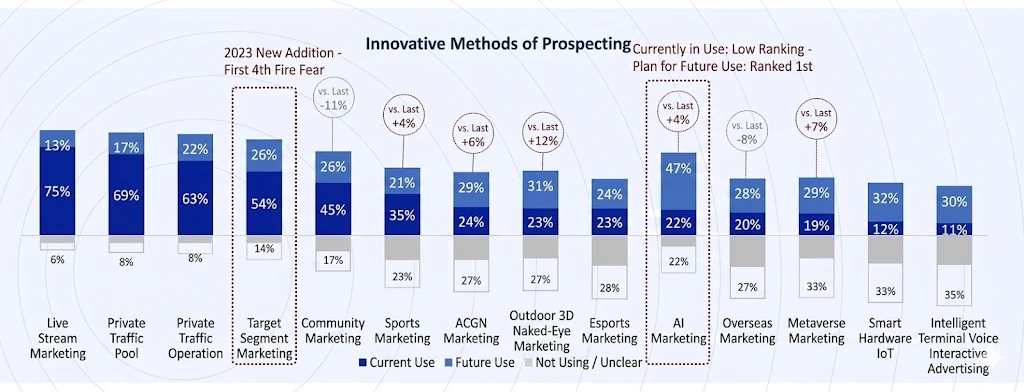
This gap highlights a critical reality: efficiency alone does not solve the problem of trust.
The Counter-Trend: Radical Sincerity
As AI-generated content becomes abundant and optimized, "human presence" has become the scarcest and most valuable signal in the market. In response, we are witnessing a massive shift toward "Founder-Led Presence" and "Radical Sincerity."
Tech leaders and B2B founders are stepping out from behind corporate logos. Communication is becoming live, unscripted, and intentionally less polished.

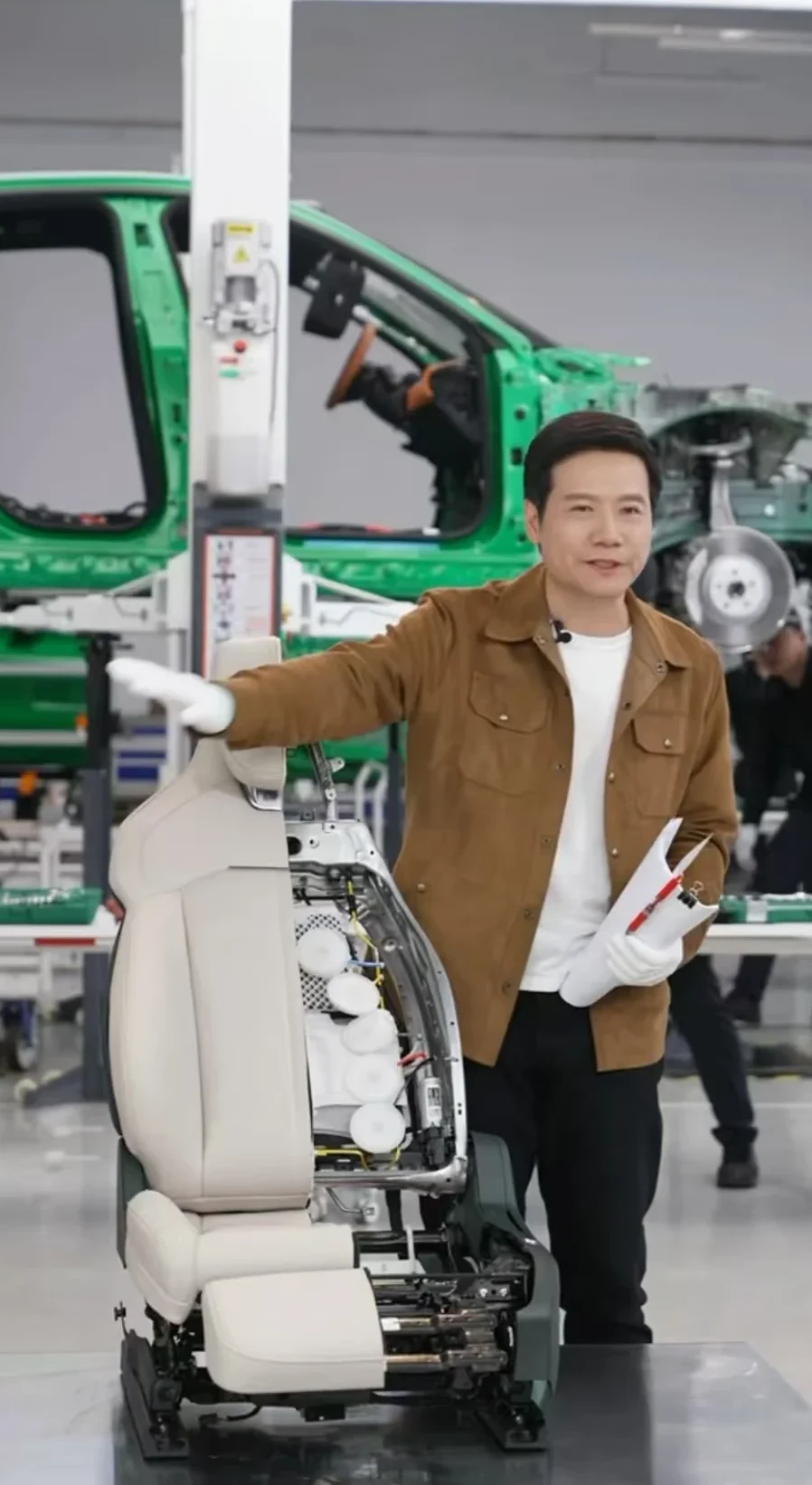
Xiaomi's Lei Jun exemplifies this, using his personal presence as trust infrastructure for the brand.
AI-native companies like Manus and Genspark are putting founders on camera to explain intent, not just promote hype. Ironically, AI companies in China are now communicating in a more human way than many traditional consumer brands. The logic is simple: when everything can be generated, what cannot be generated becomes valuable.
5. Strategic Implications: Beyond the China Market
While these dynamics are most visible in China today, they serve as a forecast for the global market. The structural pressures of ROI and the saturation of AI content will eventually reach every mature economy.
At Katlas Media, we advise our partners to adopt three transferable strategies based on these insights:
- 1. Design Experience Before Storytelling: Do not just tell a story; engineer an "Aha Moment" that requires no explanation.
- 2. Treat Content as a System: Move beyond campaign thinking. Build content as searchable infrastructure that answers user intent across all platforms.
- 3. Bifurcate Your Strategy: Use AI to scale efficiency, but use humans to anchor trust. Do not use AI to fake humanity; use it to clear the way for real human connection.
Conclusion
The future of marketing is not a binary choice between AI and humans. It is a symbiotic relationship: AI for scale, and humans for belief.
As technology accelerates faster than human understanding, the role of marketing is returning to its original function. It is no longer primarily about persuasion. It is about translation, trust-building, and meaning-making. China is simply the market where this transformation is occurring first - and most visibly.
About the Author
Lysa Wei CEO, Co-Founder of Katlas Media
Lysa Wei is a serial entrepreneur and marketing strategist with an MBA from the Kellogg School of Management. Having secured angel funding from both China and the US, she has overseen multimillion-dollar budgets for leading lifestyle and tech brands. At Katlas Media, Lysa Wei bridges the gap between Chinese innovation and global branding, helping companies navigate the complexities of cross-border growth in the AI era.